See what your skin is doing below the surface
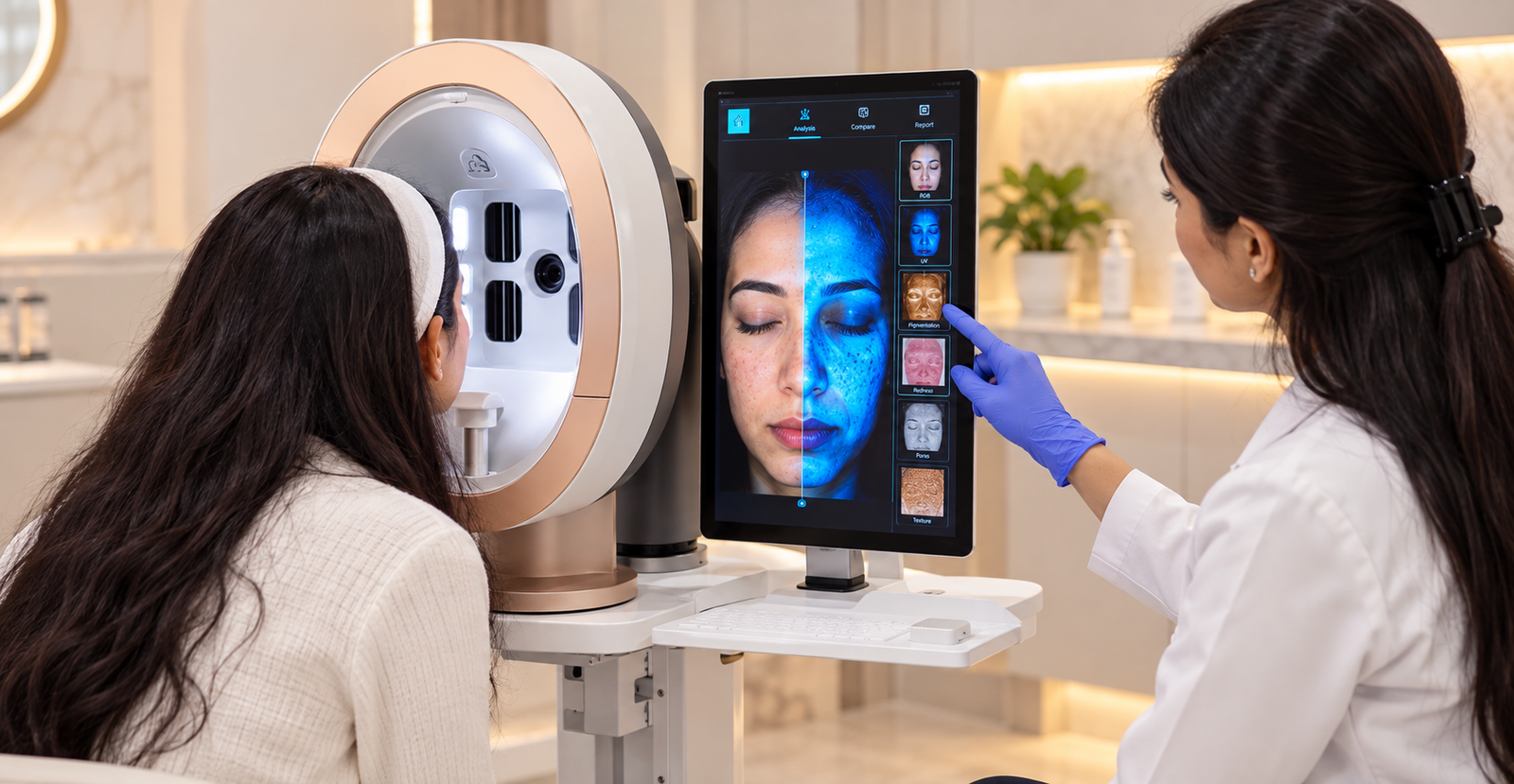
The Skin Analyser at Skinline, Hyder Nagar, Kukatpally, photographs your face under four types of light and turns the images into a detailed map of your skin — pigmentation, pores, redness and sensitivity, texture and signs of ageing — alongside hydration and oil readings. Your dermatologist then reads the results with you.
A mirror shows what is on the surface. Multi-spectrum imaging also shows what is building up underneath, such as early sun damage, hidden pigmentation and inflamed or clogged pores, so a plan can start before a problem becomes visible.
How the Skin Analyser works
Your face is photographed in a few seconds inside a light-controlled chamber. The camera captures each image under four different types of light, which together produce ten different views of the same skin:
Natural (white) light
Shows your skin as it looks in daylight: tone, texture, pores, lines and visible spots.
Polarised light
Reduces surface glare so pigment, redness and fine texture show clearly.
UV light
Reveals sun damage and pigmentation not yet visible, and highlights porphyrins, which are linked to acne-causing bacteria, and clogged pores.
Redness imaging
Maps blood vessels and inflamed areas to show where the skin is reactive.
Software then analyses the images against 30+ skin parameters. The results are decision support for your dermatologist, who interprets them alongside your history and a clinical examination.
What the analysis measures
| Area | What it shows | Why it matters |
|---|---|---|
| Pigmentation | Age spots, melasma-type patches, freckles and pigment sitting deeper in the skin | Shows how much pigment there is and how deep, which guides sunscreen, peels and laser choices |
| Pores and texture | Pore size, clogged pores, porphyrins, roughness, fine lines and wrinkles | Separates oily, congested skin from ageing-related texture changes |
| Sensitivity and redness | Redness, dilated vessels and acne-type spots, graded mild, moderate or severe | Helps decide how gently your skin should be treated and which actives to avoid |
| Ageing signs | Forehead, frown, crow’s feet, under-eye, smile and mouth-corner lines, and brown spots, each graded | Ranks which signs matter most for you, so treatment is focused |
| Skin tone | Your skin tone on the Fitzpatrick scale (I–VI), plus facial and body tone readings | Settings for peels and lasers depend on skin tone, and tone readings track tanning and lightening |
| Hydration, oil and elasticity | Handheld sensor readings on the cheeks, forehead, eye area and neck | Shows dehydration and oil balance, and gives numbers to compare at later visits |
Suited to Indian skin tones
The analyser adjusts its readings to your skin tone rather than applying one standard to every face. This matters for Indian skin, which is more prone to pigmentation and where treatment strength has to be chosen with care. Your dermatologist checks the results against your skin type and history before recommending anything.
Who it is for
- You are unsure of your skin type or what is behind your main concern
- You have pigmentation, melasma, dark spots or an uneven tone and want to know how deep it goes
- You have open pores, clogged pores or recurring breakouts
- Your skin is red, reactive or sensitive
- You are noticing early lines and want to know where to focus
- You are planning a peel, laser or microneedling and want a baseline first
When a skin analysis is not enough on its own
- A new or changing mole or patch — this needs a clinical examination
- Sudden rashes, blisters, painful or spreading lesions — see a dermatologist promptly
- Persistent redness that could be rosacea or eczema — the analyser highlights patterns, but the diagnosis is made by your dermatologist
- Hair and scalp concerns — these need a separate hair analysis
The benefits of starting with an analysis
You see what your dermatologist sees
Results are shown side by side on screen, so recommendations are easy to follow.
Hidden problems found early
Sun damage and inflamed pores can show on imaging before they are visible to the eye.
Numbers you can track
Hydration, oil and elasticity readings, and image comparisons, give you a baseline to measure progress against.
A plan built for your skin
Recommendations follow your results, not a standard package.
Before-and-after comparison
Images from different visits can be compared directly, taken under identical lighting.
What to expect: the procedure
- Your face is cleansed so nothing is covering the skin.
- You rest your face against the chamber and keep your eyes closed. The camera takes the images in a few seconds, with no contact and no discomfort.
- A small handheld sensor is placed gently on the cheeks, forehead, eye area and neck to read hydration, oil and elasticity.
- The results appear on screen and your dermatologist walks you through them, comparing the areas of your face.
- You discuss your history, products and goals, and leave with a recommended next step: a routine, a treatment, or both.
How to prepare
- Come without makeup if you can; if not, we will cleanse your face first
- Avoid applying creams or sunscreen just before the visit, so readings reflect your skin
- Bring or photograph the products you currently use, including prescriptions
- Avoid starting any new active ingredient in the week before
- Tell us about medications, allergies, and pregnancy or breastfeeding
Downtime & aftercare
There is no downtime. The analysis is non-invasive and you can return to your day straight away. Your dermatologist may suggest changes to your routine; start them as advised, one at a time.
Tracking your progress
Repeat the analysis every 3–6 months, or at set points in a treatment plan. Comparing images under the same lighting shows changes in pigmentation, redness and texture that are easy to miss in a mirror, and tells you honestly whether your routine or treatment is working.
What affects the cost
The analysis is part of the new-patient consultation. Any repeat analysis or progress comparison, and any treatment plan that follows, is quoted at your consultation, with costs and timelines given upfront.
Why Skinline for skin analysis
A set of results is only as useful as the person reading it. Technology cannot tell you what to do with a number.
At Skinline, every analysis is reviewed by dermatologists with 10+ years of experience each, who combine the results with a clinical examination and your history, so you get a plan rather than a printout.