When did ‘tired-looking’ become your default?
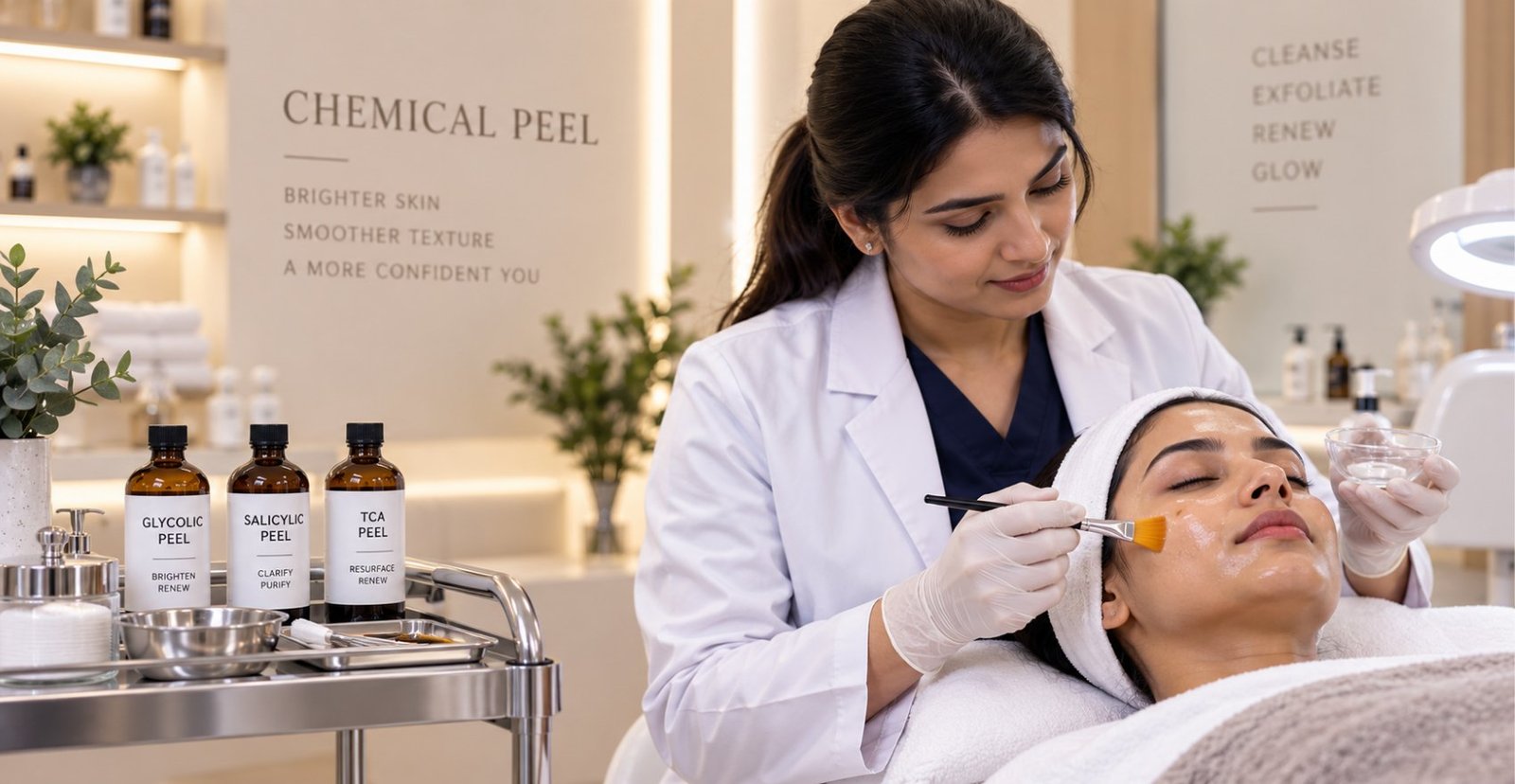
Chemical peels at Skinline, Hyder Nagar, Kukatpally, use glycolic, salicylic and TCA formulations to address dullness, uneven tone and mild texture concerns — renewing the skin’s surface rather than masking it with another layer of product.
Nothing’s specifically wrong, but nothing looks as fresh as it used to, either — that’s dullness and uneven texture, and it’s treatable, not just coverable.
Choosing the right peel
Glycolic Peels
An alpha-hydroxy acid peel best for overall brightness, fine lines and mild sun damage. A good entry point if you’re new to peels, with minimal downtime.
Salicylic Peels
A beta-hydroxy acid peel that penetrates oil, making it especially effective for oilier, acne-prone skin and blackheads.
TCA Peels
A deeper option using trichloroacetic acid, for more pronounced texture and tone concerns — with correspondingly more downtime than glycolic or salicylic peels.
Your consultation will confirm which strength and formulation fits your skin — peels aren’t one-size-fits-all, and going too strong too soon can do more harm than good.
Who should get a chemical peel
- Your main concern is dullness, uneven tone, mild texture, or early sun damage
- You have oilier or acne-prone skin (salicylic peels specifically)
- You want a lower-commitment option than laser resurfacing
- You’re looking for an ongoing maintenance treatment alongside other Skin care
Who should consider alternatives, or wait
- Active cold sores or a history of frequent outbreaks — peels can trigger a flare-up; precautions may be needed
- Pregnancy or breastfeeding — some peel acids are typically avoided as a precaution; your dermatologist will advise which options, if any, are suitable
- Active eczema, dermatitis, or sunburned skin
- Deep, pitted acne scars — peels address surface tone and texture, not deep scarring; CO2 or Erbium Glass laser treatment is typically more effective for that concern
The benefits: why choose a chemical peel
Customisable Intensity
From very mild to deeper resurfacing, matched to your skin and schedule.
An Accessible Entry Point
One of the more affordable ways to start professional skin treatment.
Minimal to No Downtime
For lighter peels specifically.
A Genuine Maintenance Option
Not just a one-time fix, but something to return to.
Layers Well With Other Treatments
Fits naturally into a broader Skin care plan.
What to expect: the procedure
A session involves cleansing the skin, applying the chosen peel solution for a set time, then neutralising and soothing the skin. For visible, lasting results, a series of 3–6 sessions spaced 4 weeks apart is typical for lighter peels; deeper TCA peels may be done as a single session or a shorter series with more time between each.
Preparing for treatment
Avoid retinoids and other strong actives in the days before your session, and avoid sun exposure or tanning beforehand.
Downtime & aftercare
Lighter peels (glycolic, salicylic) typically cause mild flaking for a few days with little visible downtime. Deeper TCA peels can cause more noticeable peeling and redness for up to a week. Sun protection is essential after any peel, since freshly treated skin is more sensitive to UV exposure.
What affects the cost of a chemical peel
Cost depends on the peel type and strength, and the number of sessions in your plan — a single TCA session may cost differently than a course of lighter peels. Your consultation includes a personalised assessment and quote.
Why Skinline for chemical peels
The wrong peel strength for your skin can mean anything from no visible improvement to unnecessary irritation.
At Skinline, every peel is selected and applied by dermatologists with 10+ years of experience each, based on your skin type and tolerance — not a standard strength applied to everyone who walks in.